
Trench, Excavation and Demolition Accident Claims in Scotland
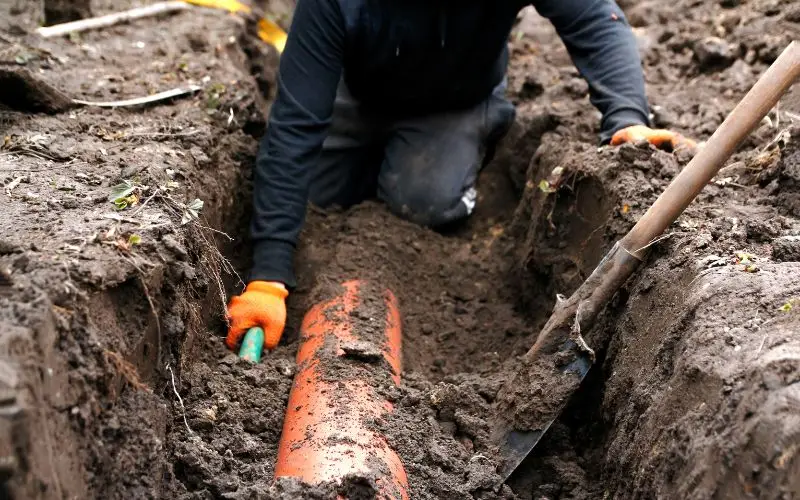
Trench, Excavation and Demolition Accident Claims in Scotland Contact Us A cubic metre of soil weighs well over a tonne. When an unsupported trench wall gives way, there’s rarely time to climb out. Demolition carries the same kind of sudden, unforgiving risk: a wall falls the wrong way, a floor gives under a machine, or debris drops onto the street below. Being trapped by something collapsing or overturning caused 18 worker deaths across Great Britain in 2025/26, according to provisional HSE figures. Groundworks and demolition account for a large share of those incidents in construction. This guide covers how claims work when things go wrong below ground or during demolition in Scotland. Contact Us Read Our Guide Table of Contents Common causes of excavation injuries: The main dangers in trenches and excavations are well known: collapse of the sides, burying or crushing workers materials or spoil falling into the trench from the edge people or plant falling in where there’s no edge protection undermining nearby walls and foundations, which then collapse striking underground services: electricity cables, gas mains and water pipes flooding, especially after heavy rain or a burst main fumes building up in deep or confined excavations Scotland’s ground conditions add their own challenges. Clay and peat behave very differently from rock, and wet weather can turn a stable trench unstable overnight. What the law requires for excavations? The Construction (Design and Management) Regulations 2015 contain specific rules on excavations. Everything practicable must be done to stop an excavation collapsing, to stop material falling onto anyone and to stop people or vehicles falling in. That usually means trench boxes, sheeting, shoring or battering the sides back to a safe angle. Where supports or battering are used, a competent person must inspect the excavation at the start of every shift, after anything that might affect its stability and after any accidental fall of material. If they’re not satisfied it’s safe, work in the excavation must stop until the problem is fixed. For buried services, the HSE’s guidance (known as HSG47) sets out a clear approach: plan using utility records, locate services on site with a cable avoidance tool before digging, and dig carefully by hand near any known service. Since October 2013, breaching these rules doesn’t automatically mean a claim succeeds. But they remain strong evidence of what reasonable care looks like. A trench dug without support, or a road dug up without the cables being traced first, will be very hard for a defender to justify. Demolition accidents: Demolition has changed a great deal. High-reach machines and controlled methods have replaced much of the old manual work. Glasgow’s Red Road flats, brought down in 2015, are a reminder of how much planning goes into a large demolition. CDM 2015 requires demolition and dismantling to be planned and carried out so as to prevent danger, with the arrangements written down before work begins. Common causes of injury include: premature or uncontrolled collapse of walls, floors or roofs falls through openings and fragile surfaces during strip-out being struck by falling debris or a machine’s attachment exposure to asbestos in older buildings that weren’t properly surveyed Asbestos deserves a special mention. Buildings put up before 2000 may contain it, and a refurbishment and demolition survey should be carried out before work starts. Diseases like mesothelioma can take decades to appear. They’re handled as industrial disease claims, with time limits that usually run from when the condition was diagnosed. Who can be held responsible? In a claim you are the pursuer and the party responsible is the defender. That’s often your employer, the groundworks or demolition subcontractor. It may also be the principal contractor, which must coordinate the work and make sure temporary works like trench supports are properly managed. Where a temporary works design was wrong, or services were wrongly marked on drawings, a designer or utility company may share responsibility. You don’t need to identify every party yourself. Our guide on who is liable on a construction site explains how this is usually worked out. Members of the public can claim too. Someone hurt by debris from a demolition site in Dundee, or who falls into an unguarded roadworks trench in Paisley, may have a claim against the contractor in control. What to do after an accident? Get medical help first. Then, if you can: photograph the trench or structure, including any supports or lack of them record the depth and soil conditions if you know them note who was supervising and which company they worked for ask whether there was a permit to dig or a demolition plan make sure the accident is entered in the accident book Trench collapses and service strikes are often investigated by the HSE. Ask whether an inspector attended, as their findings can help. Make a Claim Today Our reputation for excellence in personal injury law is unparalleled, having secured over £3 million in compensation for our clients. We are committed to achieving the best possible outcomes, consistently delivering exceptional results and ensuring our clients receive the justice they deserve. Free Claim Check Request A Callback 0333 3051 337 Time limits, compensation and no win, no fee: You usually have three years from the date of the accident to raise court proceedings. Compensation includes solatium for the injury itself and financial losses such as lost earnings, care and future income. Claims up to £100,000 start in the sheriff court, with larger claims able to go to the Court of Session. If a loved one has died in a construction accident, close family members may be able to claim for their loss under the Damages (Scotland) Act 2011. Most construction accident claims can be funded under a Success Fee Agreement. If the claim fails, there’s no fee to pay. If it succeeds, the success fee is capped by law at 20% of the first £100,000 of damages, 10% of the next £400,000 and 2.5% of anything over £500,000, with VAT included. In personal injury claims,
Plant and Machinery Accident Claims in Scotland

Plant and Machinery Accident Claims in Scotland Contact Us Plant makes construction possible. It also causes some of the worst injuries on site. A 20-tonne excavator, a reversing dumper or a crane lift that goes wrong leaves very little margin for error. Across all industries in Great Britain, being struck by a moving vehicle caused 24 worker deaths in 2025/26, according to provisional HSE figures. Contact with moving machinery accounted for another 10. Many more people suffer crush injuries, fractures, amputations and head injuries that change their working lives for good. If you’ve been hurt by plant or machinery on a Scottish building site, this guide explains your options. Contact Us Read Our Guide Table of Contents What counts as plant and machinery? On a construction site, “plant” covers almost any powered machine. The ones we see most often in claims are: excavators, including buckets that detach from a faulty quick hitch site dumpers, which can overturn on slopes or reverse into people telehandlers and rough-terrain forklifts moving materials around the site cranes and lifting gear, from tower cranes to lorry-mounted HIABs mobile elevating work platforms (MEWPs), such as scissor lifts and cherry pickers rollers, pavers and road planers on highways and resurfacing work hand-held power tools like disc cutters, breakers, nail guns and table saws The risks change with the job. Roadworks on the A9 dualling between Perth and Inverness bring heavy plant close to live traffic and workers on foot. A tight city-centre site in Edinburgh’s New Town might involve a tower crane lifting over a busy street. How plant accidents happen? Most plant accidents aren’t freak events. They tend to follow the same patterns: no traffic management plan, so pedestrians and vehicles share the same routes no banksman or signaller during reversing or lifting operators without proper training or the right card for the machine poor maintenance: worn brakes, broken reversing alarms, faulty cameras missing guards on blades and moving parts lifts planned badly or not planned at all seat belts not worn or not fitted, so the operator is thrown out in an overturn Each of those is a failure that a careful employer or contractor should have spotted. The rules that apply to plant: Several sets of regulations set out what should happen. Since October 2013 you can’t claim just because one was broken, but they’re still the yardstick courts use to judge whether reasonable care was taken. The Provision and Use of Work Equipment Regulations 1998 (PUWER) require equipment to be suitable for the job, properly maintained and used only by people who’ve been trained. Dangerous moving parts must be guarded. Mobile plant should have protection against rolling over and restraints where needed. The Lifting Operations and Lifting Equipment Regulations 1998 (LOLER) require every lift to be properly planned by a competent person, supervised and carried out safely. Lifting equipment must be thoroughly examined at set intervals. CDM 2015 requires construction sites to be organised so that pedestrians and vehicles can move around safely. That usually means separate walkways, barriers, one-way systems and controlled reversing. Faulty or hired equipment A lot of plant on Scottish sites is hired in. If a machine fails because of a defect, you might assume the hire company or manufacturer is the only one to blame. Not so. Under the Employers’ Liability (Defective Equipment) Act 1969, if your employer gave you equipment that was defective and you were injured, your employer can be held responsible even where the fault was a third party’s. The employer’s insurer can then pursue the hirer or manufacturer itself. You don’t have to. If the person injured isn’t the operator’s employee, such as a labourer from another firm struck by a reversing dumper, the claim may lie against the operator’s employer, the principal contractor or both. Our guide to who is liable on a multi-contractor site explains how that works. What to do after a plant accident? After getting medical treatment, try to: Identify the machine. Note its make, model, fleet number and any hire company stickers. Photograph the scene. Include the route the plant was using and any missing barriers. Ask whether there’s camera footage. Many modern machines and site gates record video. Note the operator’s name and employer, and whether a banksman was present. Report it in the accident book and ask if the HSE has been told. The HSE may investigate serious plant incidents. Its findings can be very useful later, though a claim doesn’t depend on there being a prosecution. Make a Claim Today Our reputation for excellence in personal injury law is unparalleled, having secured over £3 million in compensation for our clients. We are committed to achieving the best possible outcomes, consistently delivering exceptional results and ensuring our clients receive the justice they deserve. Free Claim Check Request A Callback 0333 3051 337 Compensation and no win, no fee Compensation in Scotland is made up of solatium, for pain, suffering and loss of amenity, and financial losses such as lost earnings, care and future loss of income. Plant injuries are often severe, so future losses can make up the largest part of a claim. The claim is brought by you as the pursuer against one or more defenders. Most settle through negotiation. Those that don’t usually go to the sheriff court, often the All-Scotland Sheriff Personal Injury Court in Edinburgh, with larger claims able to go to the Court of Session. You normally have three years from the accident to raise proceedings. Plant gets moved, repaired or returned to the hire yard quickly, so early action helps preserve the evidence. Most plant injury claims can be funded through a Success Fee Agreement. If you lose, there’s no fee. If you win, the success fee is capped at 20% of the first £100,000, 10% of the next £400,000 and 2.5% above £500,000, including VAT. In personal injury claims, outlays like medical reports and court fees are generally covered by the provider, apart from any after-the-event insurance premium. Your
Who Is Liable for an Accident on a Construction Site?

Who Is Liable for an Accident on a Construction Site? Contact Us You’re employed by a small drylining firm. The site belongs to a housebuilder. The scaffold was put up by another company and the forklift was hired in. Then a pallet of boards comes down and breaks your foot. So who do you claim against? It’s one of the most common questions we’re asked about building site injuries, and the honest answer is: it depends who controlled the thing that went wrong. The good news is that you don’t need to work it all out yourself before you start. Contact Us Read Our Guide Table of Contents Why construction sites are different In most workplaces there’s one employer in charge of one building. A construction site is a patchwork. A city-centre office project in Glasgow might have a client, a design team, a main contractor and twenty or more subcontractors, each with their own staff, all working in the same space at once. The law recognises this. The Construction (Design and Management) Regulations 2015 give each party a defined role, so that safety doesn’t fall through the gaps between them. The duty holders under CDM 2015: The client is whoever the project is being built for: a developer, a council, a business or a homeowner. Commercial clients must make suitable arrangements for managing the project and give contractors the information they need. On projects with more than one contractor, they must appoint a principal designer and a principal contractor in writing. The principal designer controls the pre-construction phase, planning out risks at the design stage. The principal contractor takes charge of the construction phase. It must plan, manage, monitor and coordinate the work so it’s carried out safely. That includes the construction phase plan, site inductions, keeping unauthorised people out and making sure the trades work together rather than on top of each other. Contractors must plan, manage and monitor their own work and their own workers, and follow the principal contractor’s directions. Workers must cooperate and report anything unsafe. For domestic jobs, such as an extension on a house in Stirling, most client duties pass automatically to the contractor or principal contractor. The homeowner rarely carries the risk. Your employer is usually the starting point: Whatever the site structure, your own employer owes you a personal duty of care. Scots law has recognised this for nearly a century: an employer must provide a safe place of work, safe equipment, a safe system of work and competent colleagues. The leading case, Wilsons & Clyde Coal Co v English (1938), came from a Scottish colliery. That duty can’t be passed off to someone else. If your employer sends you onto a site that isn’t safe, it can’t simply blame the principal contractor. Employers also have to carry employers’ liability insurance, so a claim is normally dealt with by the insurer. When someone else is to blame? Sometimes the fault clearly lies elsewhere: The principal contractor failed to coordinate trades, left an edge unprotected or allowed plant and pedestrians to mix without a traffic plan. Another subcontractor left materials stacked unsafely, removed a guard rail without telling anyone or operated plant carelessly. The plant-hire company supplied a machine with faulty brakes or a missing safety device. The occupier of the site failed to take reasonable care under the Occupiers’ Liability (Scotland) Act 1960. This matters most for visitors and members of the public. In a claim, you are the pursuer and those you claim against are defenders. Where two or more defenders are to blame for the same injury, the court can hold each of them liable for the whole sum. You recover your full damages and they argue amongst themselves about who pays what share. What if I’m self-employed or paid through CIS? Many site workers are labelled self-employed even when, in practice, they’re told where to be, what to do and how to do it. In law, it’s the reality of the working relationship that counts, not the label on the contract. Even where you are genuinely self-employed, the principal contractor and other contractors still owe you duties under CDM 2015 and the general law of negligence. How responsibility is worked out in practice? You don’t have to name the right company on day one. Once a claim is raised, the first defender’s insurer will often point to someone else if it thinks they’re responsible. Documents such as the construction phase plan, risk assessments, method statements, permit records and the subcontract terms usually show who controlled what. That’s why it helps to keep any paperwork from the job: your induction record, toolbox talk sheets, WhatsApp messages from the foreman and the name on your payslip. Time limits and no win, no fee: You normally have three years from the date of the accident to raise court proceedings, under the Prescription and Limitation (Scotland) Act 1973. On multi-contractor sites, it’s worth starting early. Identifying every possible defender takes time, and subcontractors can be dissolved or lose track of their records. Most claims can be run under a Success Fee Agreement. If the claim fails, you pay no fee. If it succeeds, the success fee is capped by law at 20% of the first £100,000 of damages, 10% of the next £400,000 and 2.5% above that, with VAT included in those caps. In personal injury claims, outlays such as medical reports and court dues are generally covered by the provider, except any after-the-event insurance premium. Check your agreement so you know what to expect. Make a Claim Today Our reputation for excellence in personal injury law is unparalleled, having secured over £3 million in compensation for our clients. We are committed to achieving the best possible outcomes, consistently delivering exceptional results and ensuring our clients receive the justice they deserve. Free Claim Check Request A Callback 0333 3051 337 FAQs Can I claim against the main contractor if I’m not their employee? Yes. Principal contractors owe duties to everyone working
Construction Accident Claims in Scotland: Who’s Liable and How to Claim
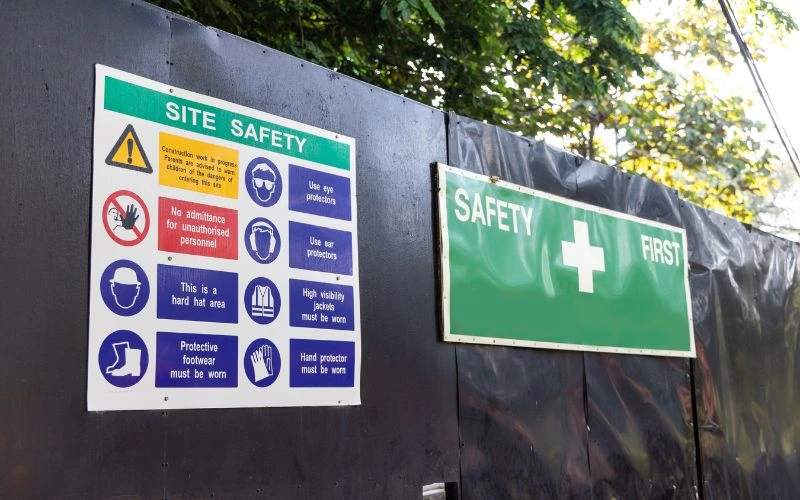
Construction Accident Claims: Who’s Liable and How to Claim Contact Us Building sites are dangerous places. Everyone working on one knows that. What people often don’t know is how a claim works when an injury happens on a site run by three or four different companies at once. Construction is still the industry with the highest number of worker deaths in Great Britain. HSE figures show 25 construction workers were killed in 2025/26, below the five-year average of 37 but still more than any other main sector. Around 50,000 construction workers a year are also hurt in non-fatal accidents. Behind those numbers are joiners, labourers, groundworkers, electricians and site managers from Inverness to the Borders. This guide explains how construction accident claims work under Scots law, who can be held responsible, and what happens next. Contact Us Read Our Guide Table of Contents What counts as a construction accident? Any injury caused by construction work can count. That covers new builds, refurbishments, roadworks, demolition and civil engineering. It also covers small domestic jobs like a kitchen fit or a loft conversion. The most common causes we hear about are: falls from ladders, roofs, scaffolds and edges being struck by plant such as dumpers, excavators and telehandlers materials or tools dropped from height trench and excavation collapses slips and trips over cables, rubble and uneven ground injuries from defective or unguarded power tools manual handling injuries from heavy blocks, kerbs and plasterboard You don’t have to be a site worker to claim. A pedestrian hit by debris falling from a city-centre site in Edinburgh, or a driver whose car is damaged by an unsecured barrier on the A9 dualling works, may also have a case. Who can be held responsible? This is where construction claims differ from most workplace claims. A typical site involves a client, a principal contractor, several subcontractors and sometimes a plant-hire firm. Each has its own duties. The Construction (Design and Management) Regulations 2015, usually called CDM 2015, set out who does what. Where a project has more than one contractor, the client must appoint a principal designer and a principal contractor. The principal contractor plans, manages and coordinates safety during the build. In a claim, the person bringing it is the pursuer and the party being claimed against is the defender. On a busy site there can be more than one defender. Your own employer is usually the first port of call, because every employer owes a duty to take reasonable care for your safety. But the principal contractor, another subcontractor or the company that hired out faulty plant may share the blame. We cover this in detail in our guide to who is liable for an accident on a construction site. Do health and safety rules still matter in a claim? Yes, even though the law changed in 2013. For accidents after 1 October 2013, you generally can’t sue just because a regulation was broken. You have to show negligence: that someone failed to take reasonable care. The regulations haven’t gone away, though. Courts still look at CDM 2015, the Work at Height Regulations and the rules on work equipment as evidence of what a careful employer or contractor should have done. If the rules say a trench must be supported and it wasn’t, that goes a long way towards proving a claim. What should I do after an accident on site? The steps you take in the first few days can make a real difference: Get medical help. See the site first aider, then A&E or your GP. Make sure the cause is written down. Report it. Ask for the accident to be recorded in the site accident book. Principal contractors normally keep their own incident log too. Take photos. Capture the scene, the equipment and any missing barriers or guard rails before things are tidied away. Get names. Note who saw it happen, who your supervisor was and which company they work for. Keep your paperwork. Payslips, your CSCS card details, the induction sheet you signed and any messages about the job. Serious injuries and over-seven-day absences should be reported to the HSE under RIDDOR. If you’re not sure whether that has happened, it’s worth asking. How much compensation could I get? There’s no fixed tariff in Scotland. Each claim is valued on its own facts. Compensation, called damages, is usually split into two parts. Solatium covers the pain, suffering and loss of enjoyment of life caused by the injury. Judges use past court decisions and the Judicial College Guidelines as a guide. Financial losses cover money you’ve lost or will lose. On a building site that often means lost wages, overtime and bonus, the cost of care from family, travel to appointments and, for longer-term injuries, future loss of earnings if you can’t go back to the tools. Self-employed workers and those paid through CIS can claim lost income too. The evidence just looks a bit different: invoices, tax returns and bank statements rather than payslips. How long do I have to claim? The general rule in Scotland is three years from the date of the accident. That comes from the Prescription and Limitation (Scotland) Act 1973. If the injury only became apparent later, the three years may run from when you became aware of it. For children, the three years don’t start until their 16th birthday. Courts do have a discretion to allow late claims, but you shouldn’t rely on it. Evidence on a building site disappears fast: scaffolds come down, plant goes back to the hire yard and workers move on. Where are construction claims heard? Most claims settle without a court hearing. If proceedings are needed, claims worth up to £100,000 must start in the sheriff court. Many workplace claims go to the All-Scotland Sheriff Personal Injury Court in Edinburgh. Higher-value claims can go to the Court of Session. Make a Claim Today Our reputation for excellence in personal injury law is unparalleled, having secured over £3 million