Personal Injury Claims Scotland
pics-hero.webp

Construction Accident Claims Scotland

Construction

As Featured In:

A single fall from a ladder or a dropped load can halt a career built over twenty years in an instant. Yet the physical injury is often just the beginning. Suddenly, you are left facing mounting bills, mortgage payments, and the worry that the site will simply move on without you.

Every year an estimated 40,000 workers across Scotland are injured at work, according to HSE figures (PDF). If you have suffered a building site injury, you may be able to claim compensation for pain, lost earnings and your future.

We work alongside a team of specialist personal injury solicitors best suited to your specific case, ensuring your representation is tailored to your needs. We oversee the entire process, keeping you fully informed while you focus on your treatment and rehabilitation. Most site injuries stem from employer negligence, and any compensation is paid directly by compulsory liability insurance, not by your boss or colleagues you work alongside.

If you have been injured due to someone else’s negligence, contact our team today for a confidential, no-obligation assessment of your claim.

Satisfied Clients
0 K+
Dedicated Experts
0 +
Client Rating
0
Compensation Recovered
£ 0 + M

Am I Eligible to Claim Construction Site Injury Compensation in Scotland?

Following a site accident, injured workers are often told it was their own fault and that they should have simply watched their step. In reality, that assumption is legally flawed. Employers and principal contractors have a strict duty of care to maintain a safe working environment. If an accident was caused by a failure in site safety, your right to compensation is rarely limited by your working arrangement.

Under Scottish law, claims can be made by:

  • Direct employees of the main contractor or a sub-contractor
  • Agency workers, where the agency, the site operator or both may carry responsibility
  • Self-employed contractors and CIS card holders working under another party’s direction
  • People on a zero-hours contract, who hold the same rights as anyone else
  • Migrant workers, whatever their immigration status or payment method
  • Site visitors such as delivery drivers and inspectors, plus members of the public hurt by site activity


Strict deadlines also apply to your case. Under the Prescription and Limitation (Scotland) Act 1973, you generally have three years from the date of the accident to bring a claim. Scottish courts do have the legal power to allow late claims under Section 19A of the Act, but this is granted only in rare and exceptional circumstances. For this reason, seeking early legal advice is vital to ensure you do not lose your right to compensation.

Can You Claim After a Fatal Construction Accident or for a Family Member?

A death on site leaves a household facing grief and financial collapse at once. Under the Damages (Scotland) Act 2011, a spouse or civil partner, a cohabiting partner of at least two years, children and other dependants may bring a dependency claim covering funeral costs, lost income and the support the deceased would have given.

Following a fatal incident, the police and the Health and Safety Executive (HSE) will typically seal the site to investigate. Involving a solicitor at this early stage ensures crucial records, risk assessments, and witness accounts are secured before the site reopens.

How Long Do You Have To Declare Accidents For Car Insurance?

"A Student’s Journey from Trauma to Triumph: Efthymios’s Fight for Justice After a Devastating Car Accident"

When Efthymios was injured in a car accident, he was left with severe facial injuries. He didn’t know how he would manage his recovery and studies.

“When I got in contact with HD Legal, they made me feel supported. They were incredibly understanding and fought hard for me, ensuring I received the compensation I deserved.”

Read Efthymios’s story >

What To Do After A Car Accident Not Your Fault ?

"Cracked Pavement, Broken Ankle: How HD Legal Helped Margaret Find Justice and Peace of Mind"

When Margaret tripped on a neglected crack in the pavement in Glasgow, she shattered her ankle and was forced to take months off work, unsure how she would manage.

“HD Legal were a lifeline for me. They took care of everything—from gathering crucial evidence to battling the council—and gave me the peace of mind I needed to focus on my recovery.”

Read Margaret’s story >

mr.douglas-story

"Blown Away: HD Legal Fights for Douglas After Faulty Washing Machine Explosion"

When Douglas’s new washing machine exploded, it caused a fire that damaged his kitchen and left him with painful burns.

“HD Legal fought relentlessly for me when it seemed like no one else would. They were thorough, professional, and supported me every step of the way, helping me recover both physically and financially.”

Read Douglas’s story >

"From Misdiagnosis to Recovery: How HD Legal Fought for Eilidh’s Justice and Secured the Care She Needed"

When Eilidh’s severe abdominal pain was repeatedly misdiagnosed, her condition worsened, leading to the need for urgent surgery.

“HD Legal stood by me when I felt lost. They were thorough, professional, and fought tirelessly to get me the care and compensation I needed to heal.”

Read Eilidh’s story >

mr.alistair-story.webp

"Falling from Heights, Rising with Justice: How HD Legal Secured Compensation for Alistair After a Workplace Accident Involving Faulty Scaffolding"

Alistair Campbell’s fall from faulty scaffolding left him with serious injuries and months of recovery.

“HD Legal’s panel of solicitors fought for me, ensuring I received the support needed to move forward.”

Read Alistair’s story >

£3+ Million in settlements

That’s how much our expert personal injury team has achieved for our clients.

That’s why we’re Scotland’s leading personal injury firm.

£3+ Million in settlements

That’s how much our expert personal injury team has achieved for our clients.

That’s why we’re Scotland’s leading personal injury firm.

Who Is Responsible for Safety on a Scottish Construction Site?

On a busy site, safety is rarely down to just one person. The main contractor runs the site, sub-contractors look after their own employees, and supervisors direct daily work. If hired equipment or machinery fails, the supplier has to answer for it.

The law sets straightforward rules for who carries responsibility across every building site.


When a breach of any of these statutory duties contributes to an accident, the responsible party can be held liable. In nearly every case, your compensation is settled directly through that company’s liability insurer rather than paid from individual pockets.

Offshore, Wind Farm, and Cross-Border Site Accidents

Not every site sits in a postcode. Many Scottish workers are injured on oil and gas installations, on wind farm construction and wider renewables projects, and on cross-border jurisdiction sites elsewhere in the UK while employed by a Scottish employer.

Which law applies depends on where the accident happened, where your employer is based and the contracts. Do not write off a claim just because your job was at sea or across the border. Many offshore workers are fully protected under Scottish law, and doing nothing could cost you your payout.

Common Causes of Construction Site Injuries We Handle

  • Falls from height, such as collapsed scaffolding, slipping ladders, and unguarded roof edges
  • Being struck by falling tools, unsecured building materials, or crane loads
  • Heavy machinery accidents involving excavators, telehandlers, and forklifts
  • Slips and trips caused by muddy ground, obstructed walkways, and bad lighting
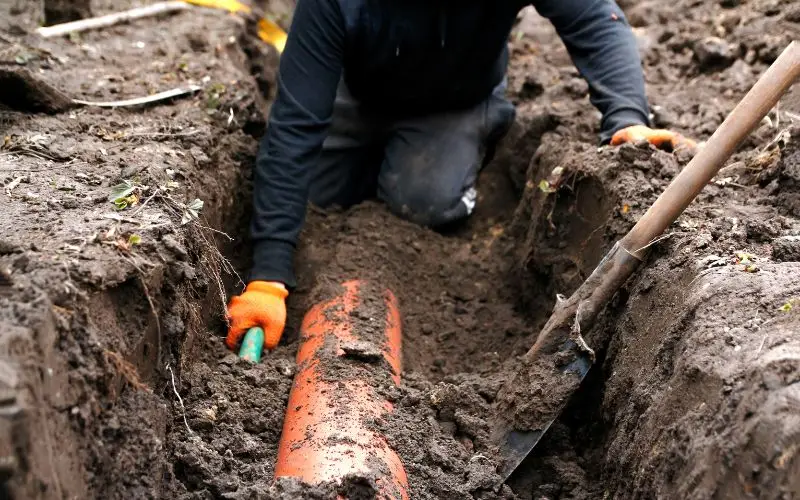
  • Trench cave-ins and collapses in unsupported excavations
  • Electrical shocks from hidden cables or faulty equipment
  • Heavy lifting injuries affecting your back, shoulders, or joints

Industrial Disease Appearing Years On

Not all site injuries happen in a single split second. Conditions like vibration white finger from heavy breaker work, hearing loss from loud machinery, occupational asthma, and asbestos-related illnesses often take years or decades to surface.

Under Scottish law, your three-year deadline only starts when your illness is diagnosed or linked to your work, not when the exposure took place.

claim-form

Can’t work due to illness or injury?

Use our free online claim check tool and find out in minutes if you have a claim.

Construction Compensation Calculator: What Could Your Claim Be Worth?

Every payout comes down to two real factors: the physical toll on your body, and the financial hit to your bank account.

The physical element is known in Scots law as solatium. This covers the pain and suffering you endured, the mental stress, and the ways your injury disrupted your everyday life. A minor injury that recovers in a few weeks might settle for around £2,000. In contrast, serious back or joint damage that permanently impacts your mobility can reach well over £100,000.

The financial element covers your patrimonial loss. This repays the direct financial hit you have taken, including lost wages on your payslips, travel expenses, and medical costs. If your injuries permanently reduce what you can earn on site or require ongoing assistance at home, it also accounts for future loss of earnings and lifetime care needs.

Because of this, no generic calculator can give an exact figure. Two workers who suffer the exact same fracture will receive completely different compensation payouts depending on their age, their trade, and their long-term medical prognosis.

Step-by-Step Guide: How to Make a Construction Accident Claim

Report the injury on site.

Confirm the accident is logged in the official accident book or safety report. Always ask for a copy or take a clear photo of the completed page on your phone.

Seek medical treatment and keep your records.

Go to A&E or see your GP straight away, even if you feel you can push through the pain. Hold on to every clinic letter, scan result, and prescription receipt, because these papers prove exactly how badly you were hurt.

Document the problem and take notes.

Building sites change fast. Take quick photos or videos of the broken kit, missing rails, or messy ground before someone fixes or cleans them up. While everything is still fresh in your head, jot down what happened so you do not forget important details later.

Contact Us.

We assess your case, investigate how the accident happened, and identify the correct defender and their insurer to hold accountable.

Building the evidence and managing the strategy.

Your solicitor will obtain independent medical reports and begin formal negotiations with the insurer.

Securing your settlement.

The vast majority of claims are settled out of court through negotiation. If the insurer disputes liability or makes an unfair offer, an action is raised in the Sheriff Court or the Court of Session to secure the full compensation you deserve.

Crucial Evidence That Strengthens Your Scottish Claim

Building site claims are won or lost on the paper trail and digital records created around the job. To prove what went wrong, you need hard proof before the company cleans up or hides its mistakes. Vital evidence that backs up your claim includes the following.

  • Security camera footage. Most site cameras automatically wipe recordings after four weeks, so securing video clips right away is crucial.
  • The company accident report. By law, serious site accidents must be officially logged and reported to the Health and Safety Executive, creating permanent government proof of your injury.
  • Written site safety plans. Documents like method statements and risk assessments prove whether bosses actually planned the job safely or cut corners to save time.
  • Safety briefing sign-in sheets. Paperwork from your first-day onboarding and daily safety meetings proves whether management ever warned you about the dangers or just sent you in blind.
  • Protective gear records. Sign-out sheets showing what safety kit was issued, whether it was maintained, and if it was even suitable for the task.
  • Names and numbers of witnesses. Contact details for workmates, subcontractors, or delivery drivers who saw you get hurt or noticed the danger earlier that shift.
  • Your own notes from the day. Writing down times, weather, ground conditions, and conversations with supervisors stops the company from changing the story later.


Your solicitor acts quickly to request these records in writing before companies can archive, misplace, or overwrite them.

DEDICATED CLAIMS ADVISORS

Our dedicated claims advisors are always available to offer free legal advice.

100% NO WIN NO FEE CLAIMS

All our claims are processed on a No Win No Fee basis; you pay nothing if you lose.

pics-mobile-a-1.png

MILLIONS SECURED IN DAMAGES

To date, we have secured millions in damages.

THOUSANDS OF SATISFIED CLIENTS

To date, we have helped thousands of clients recover compensation and continue to do so.

Overcoming Common Fears About Claiming Against an Employer

Employer’s Liability Insurance is compulsory for nearly every employer and exists to pay claims like yours. The money comes from the insurer, not your boss’s account. Sacking you for making a legitimate claim is strictly illegal, and the law protects you against being penalised or treated unfairly for raising safety concerns.

Contributory negligence is the other common worry. A lot of workers hold back because they think the accident was partly their own fault. Maybe you forgot your gloves, missed a step, or took a quick shortcut across site. That does not mean your claim is dead.

If site management failed to keep the area safe, you still have every right to compensation. A judge might reduce a small percentage of your payout to account for your mistake, but you will not have your case thrown out, and you will still walk away with the financial support you need.

No Win No Fee Construction Claims with No Hidden Costs

Under a no win no fee agreement, there are zero upfront costs, and legal fees are paid only if your claim is successful. In Scotland, success fees are strictly capped by law, ensuring you keep the vast majority of your compensation.

Any success fee is agreed clearly in writing before you proceed, so you know exactly what to expect. The fee is simply deducted as an agreed percentage from your final payout, never from your own pocket.

To remove all financial risk, After the Event insurance covers the other side’s legal costs if your claim does not succeed, ensuring a losing case never leaves you with debt. All figures and terms are explained transparently from day one.

Why Choose Us?

Construction site injury cases turn on documents most people never see: the CPP, induction sheets, scaffold inspection records.

Our team assesses your claim and works with a specialist Scottish personal injury solicitor. We know which records decide liability in the Sheriff Court, and we ensure they are requested and secured early, before they are archived.

Seeking expert advice for a personal injury claim in Scotland? If you have been injured due to someone else’s negligence, contact our team today for a confidential, no-obligation assessment of your claim.

FAQs

How long do I have to make a construction accident claim in Scotland?

Three years from the accident under the Prescription and Limitation (Scotland) Act 1973. For conditions developing later, time runs from the date of knowledge.

Yes. Under Scottish law, safety responsibility falls on whichever company controlled the work environment, regardless of your employment status. You have the exact same right to a safe working site whether you hold a CIS card, work through an agency, or are on a zero-hours contract. If their negligence caused your injury, you are fully entitled to claim.

No, it should not affect your job or your relationship with your employer. Any compensation is paid directly by the company’s liability insurer rather than out of your boss’s own pocket, so the business suffers no direct financial loss and has no reason to hold it against you.

You are also protected by employment law. Sacking you, cutting your hours, or treating you unfairly for making a legitimate injury claim is against the law.

Yes. Contributory negligence reduces the award by a percentage reflecting your share of blame, but the claim stands.

It costs you nothing to begin. Your initial claim assessment is completely free with no obligation, and cases run on a no win no fee basis. We also put specialist insurance in place to cover the other side’s legal expenses if the claim does not succeed, ensuring you face zero financial risk and walk away with no debt.

Talk to Our Compensation Experts Today

Find out where you stand - completely free of charge.

Simply fill out the form, and one of our specialists will contact you within one hour.

Need urgent advice?

Call us immediately at 0333 3051 337

Request a FREE call

Terms and conditions